
The global textile industry is one of the largest manufacturing sectors in the world, supplying fabrics, garments, home textiles, technical textiles, and industrial products to millions of consumers. As competition continues to increase, textile manufacturers are under constant pressure to improve productivity, reduce costs, and maintain superior product quality.
Whether you are establishing a new textile manufacturing unit in India, expanding production in Bangladesh, upgrading facilities in Turkey, or investing in textile production in Sri Lanka, Egypt, Vietnam, or Nepal, choosing the right textile manufacturing machinery is one of the most important business decisions you will make.
Modern textile machinery enables manufacturers to produce higher-quality yarns and fabrics while maximizing operational efficiency. From yarn twisting and winding to covering and doubling, every stage of textile production depends on reliable and advanced machinery.
This guide explores the most important textile manufacturing machines used in modern textile factories and explains how they contribute to production efficiency, quality improvement, and long-term business growth.
What is Textile Manufacturing Machinery?
Textile manufacturing machinery refers to specialized equipment used throughout the textile production process. These machines help transform raw fibers and yarns into finished textile products while ensuring consistency, quality, and efficiency.
The primary objectives of textile machinery are:
- Improving production speed
- Enhancing yarn quality
- Reducing labor dependency
- Increasing manufacturing capacity
- Minimizing production costs
- Supporting automation and digital monitoring
As global demand for textiles continues to rise, investing in advanced textile machinery has become essential for manufacturers seeking sustainable growth.
Why Choosing the Right Textile Machinery Matters
The quality of textile products is directly influenced by the machinery used during manufacturing. Even high-quality raw materials may fail to produce premium products if outdated or inefficient equipment is used.
Modern textile machinery helps manufacturers:
Improve Product Quality
Advanced machinery ensures consistent yarn processing and reduces defects throughout production.
Increase Production Capacity
High-speed equipment allows manufacturers to produce more within the same operational timeframe.
Reduce Manufacturing Costs
Automation and energy-efficient systems lower labor and operational expenses.
Enhance Export Competitiveness
Reliable machinery helps manufacturers meet international quality standards and delivery expectations.
Essential Textile Manufacturing Machines
1. TFO Machines (Two For One Twister Machines)
TFO Machines are among the most important machines in yarn processing operations.
These machines are used to impart twist to yarn, increasing its strength and improving its overall quality.
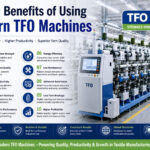
Benefits of TFO Machines
- Improved yarn strength
- Better yarn uniformity
- Reduced hairiness
- Higher production efficiency
- Enhanced weaving and knitting performance
TFO Machines are widely used by textile mills across India, Bangladesh, Turkey, Egypt, Vietnam, Sri Lanka, and Nepal.
2. Double Deck TFO Machines
Double Deck TFO Machines are designed for manufacturers who require higher production capacity without significantly increasing factory floor space.
Benefits of Double Deck TFO Machines
- Increased spindle capacity
- Better space utilization
- Higher production output
- Improved operational efficiency
- Lower production costs per unit
These machines are ideal for medium and large-scale textile manufacturing facilities.
3. Cone Winding Machines
Cone winding is one of the most critical processes in textile manufacturing.
A Cone Winding Machine prepares yarn packages for weaving, knitting, dyeing, and other downstream operations.
Benefits of Cone Winding Machines
- Smooth yarn unwinding
- Reduced yarn breakage
- Better package formation
- Improved weaving efficiency
- Higher yarn quality
Modern cone winding machines contribute significantly to overall production efficiency.
4. Assembly Winders
Assembly Winders are used to combine multiple yarn ends into a single package before further processing.
Benefits of Assembly Winders
- Uniform yarn preparation
- Improved package quality
- Better process consistency
- Reduced yarn defects
- Enhanced productivity
These machines are essential for preparing yarns for twisting and specialty yarn production.
5. Doubler Machines
Doubler Machines combine multiple yarns into a stronger and more balanced structure.
These machines are widely used in thread manufacturing, embroidery thread production, and specialty yarn applications.
Benefits of Doubler Machines
- Higher yarn strength
- Better thread quality
- Improved uniformity
- Reduced breakage
- Enhanced production consistency
Doubler Machines play a vital role in premium-quality yarn production.
6. Yarn Covering Machines
Yarn Covering Machines are used to wrap one yarn around another to create specialized yarn products.
These machines are commonly used for:
- Fancy yarn production
- Elastic yarn manufacturing
- Decorative yarn applications
- Technical textile production
Benefits of Yarn Covering Machines
- Improved elasticity
- Enhanced appearance
- Higher product value
- Greater design flexibility
- Better market competitiveness
7. Rubber Covering Machines
Rubber Covering Machines are widely used in elastic yarn manufacturing.
Industries that utilize these machines include:
- Garment manufacturing
- Hosiery production
- Sportswear manufacturing
- Medical textile production
Benefits of Rubber Covering Machines
- High-quality elastic yarn production
- Improved durability
- Better stretch performance
- Consistent product quality
8. Spandex Covering Machines
With the growing popularity of stretch fabrics, Spandex Covering Machines have become increasingly important in textile manufacturing.
These machines help produce yarns used in:
- Activewear
- Sportswear
- Fashion garments
- Performance textiles
Benefits of Spandex Covering Machines
- Superior stretch properties
- Improved fabric comfort
- Enhanced durability
- Better product performance
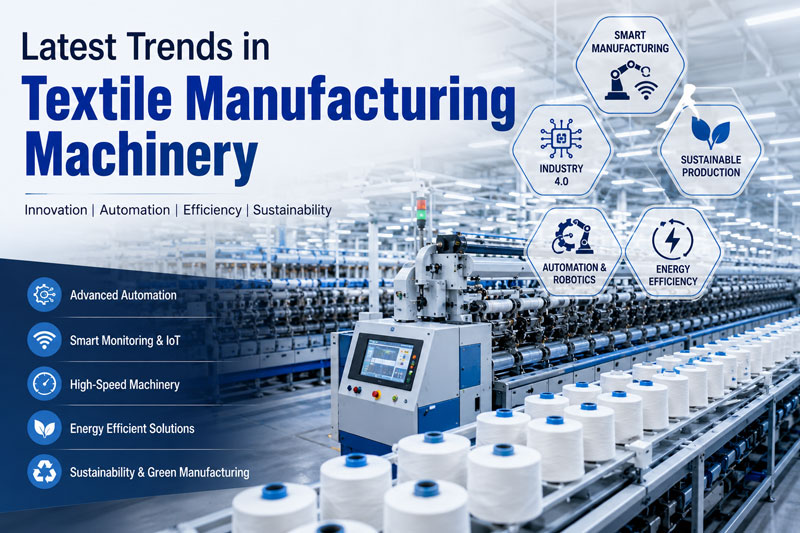
Latest Trends in Textile Manufacturing Machinery
The textile industry is rapidly adopting advanced technologies to improve productivity and competitiveness.
Smart Manufacturing
Modern machines provide real-time monitoring and production tracking capabilities.
Industry 4.0 Integration
Digital systems help manufacturers optimize production and maintenance processes.
Automation
Automated machinery reduces labor dependency while improving consistency and efficiency.
Energy-Efficient Machinery
Manufacturers increasingly prioritize machinery designed to reduce energy consumption and operating costs.
Predictive Maintenance
Advanced sensors help identify potential issues before machine failures occur.
How Modern Textile Machinery Improves Production Efficiency
Modern textile machinery provides several operational advantages.
Faster Production
High-speed machinery enables manufacturers to increase output without sacrificing quality.
Better Quality Control
Advanced monitoring systems reduce defects and improve consistency.
Lower Operating Costs
Energy-efficient equipment helps reduce production expenses.
Reduced Waste
Precise process control minimizes material wastage.
Higher Profitability
Improved productivity and efficiency contribute directly to stronger financial performance.
Why Textile Manufacturers Worldwide Are Upgrading Their Machinery
Textile manufacturers in India, Bangladesh, Sri Lanka, Turkey, Egypt, Vietnam, and Nepal are increasingly investing in advanced machinery to remain competitive.
Their objectives include:
- Meeting international quality standards
- Expanding export opportunities
- Increasing production capacity
- Reducing operational costs
- Improving product quality
- Supporting sustainable manufacturing
Companies that invest in modern textile machinery are better positioned for long-term growth and profitability.
How to Choose a Textile Machinery Manufacturer
Selecting the right textile machinery supplier is critical for achieving production success.
Consider the following factors:
Experience
Choose a manufacturer with extensive industry expertise.
Product Quality
Ensure machinery is built using durable and reliable components.
Technology
Look for advanced automation and energy-efficient designs.
Technical Support
Reliable after-sales service is essential for minimizing downtime.
Global Reach
A manufacturer with international experience can better support export-focused businesses.
Why Choose National Textile Engineering?
National Textile Engineering is a trusted manufacturer and exporter of advanced textile machinery, serving textile manufacturers across India and international markets.
Our product range includes:
- TFO Machines
- Double Deck TFO Machines
- Cone Winders
- Assembly Winders
- Doubler Machines
- Yarn Covering Machines
- Rubber Covering Machines
- Spandex Covering Machines
Our machinery is engineered to help textile manufacturers improve productivity, enhance yarn quality, reduce operational costs, and achieve sustainable growth.
We proudly serve customers across India, Bangladesh, Sri Lanka, Turkey, Egypt, Vietnam, Nepal, and other emerging textile manufacturing markets.
Whether you are establishing a new textile factory or upgrading existing production facilities, National Textile Engineering offers innovative and reliable machinery solutions tailored to your requirements.
Frequently Asked Questions (FAQs)
What machinery is required for textile manufacturing?
Common textile manufacturing machinery includes TFO machines, cone winding machines, assembly winders, doubler machines, yarn covering machines, and spandex covering machines.
What is the most important machine in yarn manufacturing?
TFO Machines and Cone Winding Machines are among the most important machines used in yarn processing and preparation.
How can textile machinery improve production efficiency?
Modern textile machinery improves speed, quality, automation, and energy efficiency while reducing downtime and waste.
Which countries are investing heavily in textile machinery?
India, Bangladesh, Turkey, Egypt, Vietnam, Sri Lanka, and Nepal are among the fastest-growing textile manufacturing markets investing in advanced machinery.
How do I choose the right textile machinery supplier?
Evaluate experience, product quality, technology, technical support, and industry reputation before making a decision.
Why is automation important in textile manufacturing?
Automation increases productivity, improves consistency, reduces labor costs, and enhances profitability.
Conclusion
Textile manufacturing machinery forms the backbone of every successful textile production facility. From TFO Machines and Cone Winders to Doubler Machines and Covering Machines, each piece of equipment plays a crucial role in ensuring efficiency, quality, and profitability.
As textile industries continue to expand across India, Bangladesh, Sri Lanka, Turkey, Egypt, Vietnam, and Nepal, investing in advanced machinery is becoming increasingly important for maintaining competitiveness in global markets.
Manufacturers that embrace modern textile technology can achieve higher productivity, lower operating costs, improved product quality, and stronger business growth.
Contact National Textile Engineering
Looking for reliable textile manufacturing machinery for your textile mill or production facility?
National Textile Engineering offers high-performance textile machinery designed to help manufacturers improve efficiency, enhance yarn quality, and maximize profitability.
Contact us today to discuss your requirements and discover the ideal machinery solution for your textile manufacturing business.